

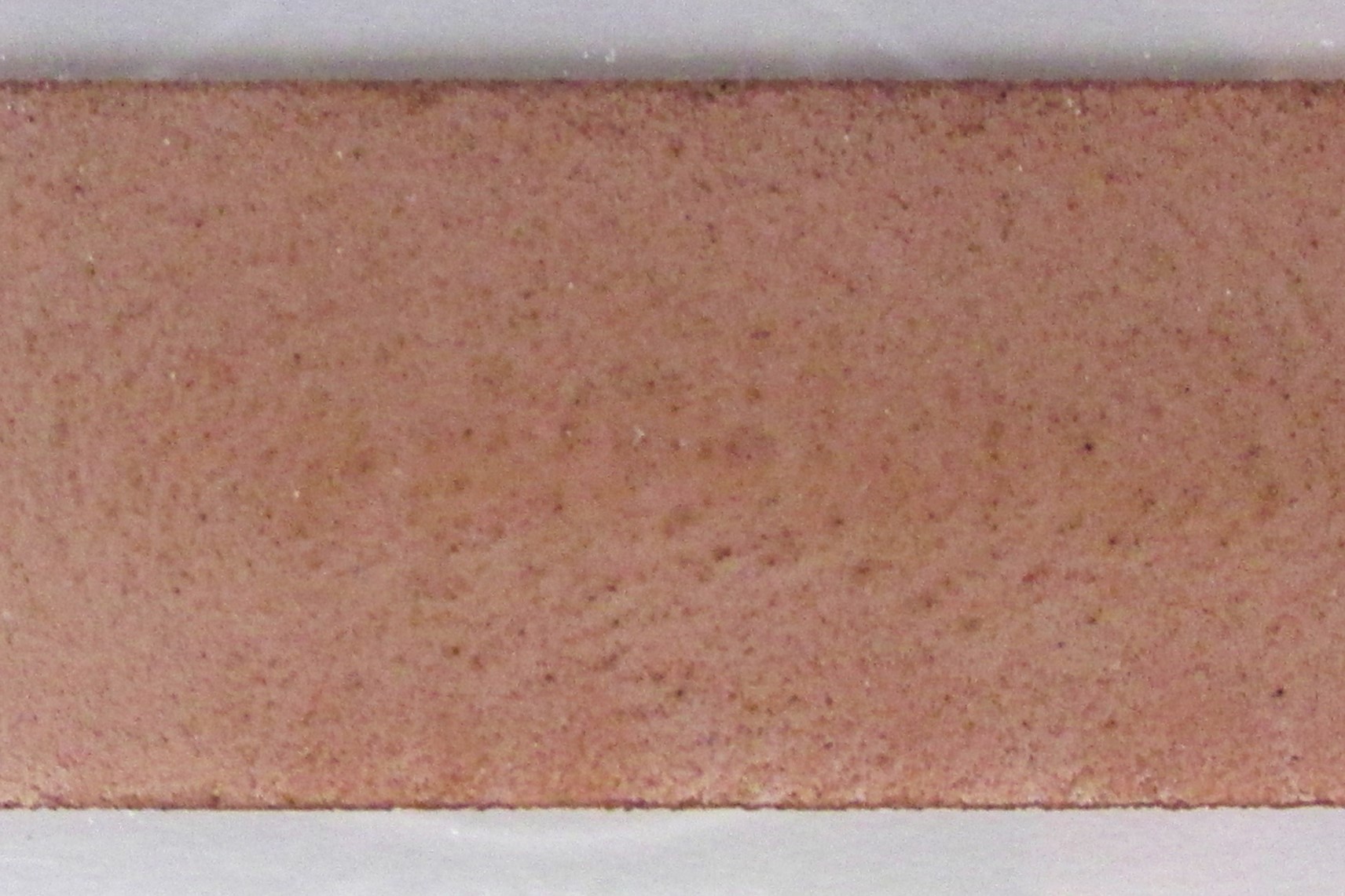


Properties & Qualities
Application
Art, Sample making
Qualities
2D, Colourful, Rigid, Translucent
Colour
Red
Sample Information
Date of creation
10/02/2019
Process & Production
According to this recipe, antimony, lead oxide, and iron rust should be ground together and then used as a paint. In this case, the antimony may have been used to enhance the oxidation of iron compounds associated with rust. All the other recipes for sanguine in this source call for a vitreous binder, except this one. To determine the best interpretation of this recipe, two reconstructions were made: recipe I3 without glass (I3wo/g) and recipe I3 with glass (I3w/g). This recipe (I3w/g) used antimony(III) oxide (Sb2O3), lead-silica glass (PbO·SiO2), and iron rust (Fe2O3·nH2O) in the proportions of 3:3:1 by wt. The lead-silica glass had been previously prepared according to Félibien (1676) and Blancourt (1697) (PbO: SiO2, 3:1 by wt). This mixture was then ground and painted on a glass with gum Arabic dissolved in distilled water. Finally the paint was fired at 620ºC for 30 minutes (ramp 3ºC/minute).
Find more at:
Â. Santos, M. Vilarigues (2019). Sanguine Paint: Production, Characterization, and Adhesion to the Glass Substrate. Studies in Conservation 64, 4, 221-239.
Recipe Details
Ingredients:
antimony(III) oxide (Sb2O3), lead-silica glass (PbO: SiO2, 3:1 by wt), and iron rust (Fe2O3·nH2O), gum Arabic, distilled water.
Recipe Source: Sanguine reconstruction of recipe number 51 by Johann Kunckel (“Ars Vitraria experimentalis”, 1679, pp 395).
Credits
Craft Maker
Ângela Santos
Library Contributor
VICARTE, NOVA
Photographer
Ângela Santos
Other Materials
-

Workshop outcome: Introduction to Sashiko
Sashiko experimentation made by novice participant of the Craft Hub Sashiko Workshop delivered by London-based garment maker Masahiko Morikawa of Studio Masachuka.
-

Fired copper UV printed
-

Murmuration
woven, monofilament, metal, manipulated.
-

Beads & lacquer hairpin in golden rose
Exploration of colour and material
-

Natural Indigo screen printing – Dye process
-

Airbrush Copenhagen grey
Application of paint over the entire glass surface
-

The dance of love
Soft milk fiber stole
-

Spencil
Silicone Ice cream pencil spoon
-

UV Printed Glass ‘Fresh Blooms’
Printed Glass ‘Fresh Blooms’